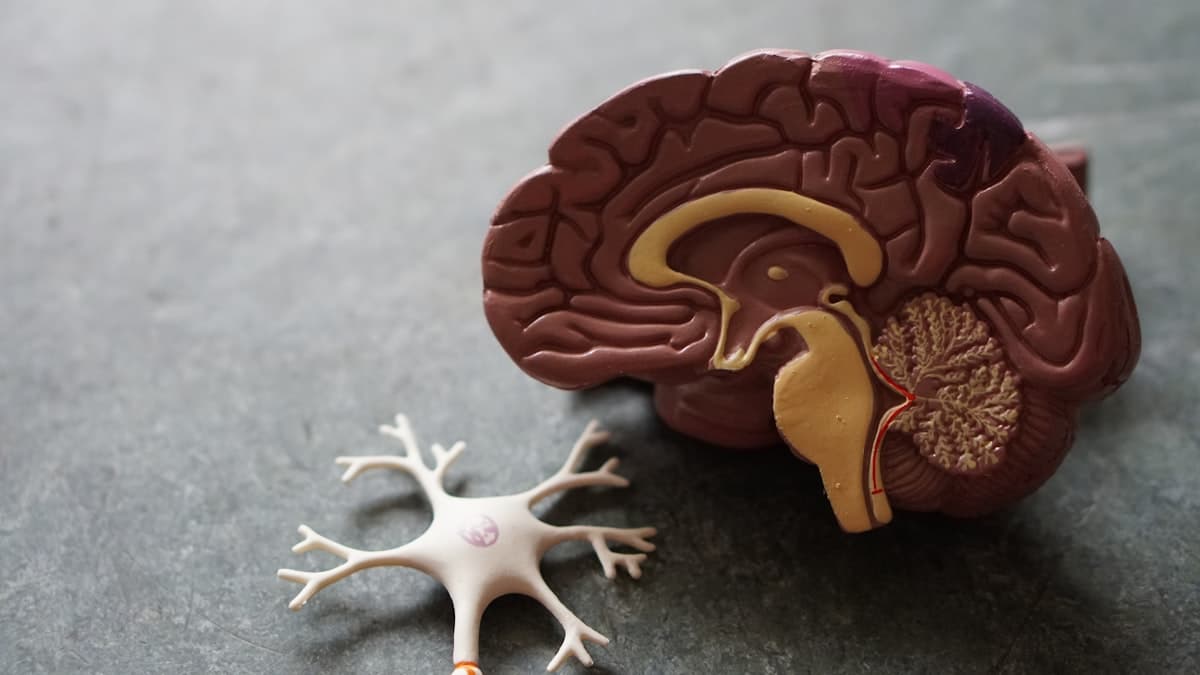
Memory is the brain's most personal superpower — and one of its most baffling failures. Neuroscientists at institutions like MIT and University College London have spent decades mapping how the brain converts a fleeting experience into something you can recall years later, and the answer is far stranger than most people expect. Memory is not a recording. It is not stored in a single place. It is not even static — every time you remember something, you subtly change it. Understanding how memory actually works doesn't just satisfy curiosity; it fundamentally alters how you learn, how you trust your own recollections, and how you protect your mind as you age.
What exactly is a memory?
The intuitive model of memory — a kind of mental filing cabinet where experiences are neatly stored and retrieved — is wrong in almost every detail. Memory is better understood as a biological process of reconstruction, not playback.
At the cellular level, memories are encoded as patterns of connections between neurons. When you experience something — a conversation, a smell, a moment of fear — neurons that fire together in response to that event strengthen their synaptic connections. The neuroscientist Donald Hebb summarised this in 1949 with a phrase that has become one of neuroscience's most famous: 'neurons that fire together, wire together.' This synaptic strengthening is now called long-term potentiation (LTP), and it is widely considered the cellular foundation of learning and memory.
But here's what that model doesn't capture: a single memory is not stored in one neuron, or even one brain region. It is distributed across a network. The emotion attached to a memory lives partly in the amygdala. The spatial context is anchored in the hippocampus. The sensory details — the colour of a room, the sound of a voice — are stored back in the same sensory cortices that originally processed them. To remember something is to reassemble all these scattered pieces in real time. This is why memories feel vivid but are, structurally, always approximations.
How does the brain encode and store new memories?
Not everything you experience gets stored. The brain is selective by necessity — if it recorded every sensory input equally, it would be overwhelmed. Memory formation happens in three stages: encoding, consolidation, and retrieval.
Encoding is the process of converting an experience into a neural pattern. Attention is the critical gatekeeper here. Research consistently shows that information you don't consciously attend to is poorly encoded — which is why you can drive a familiar route and remember almost nothing about it, but vividly recall a near-miss with another car. The brain prioritises novelty, emotional significance, and relevance to survival.
Consolidation is where the real work happens, and much of it occurs during sleep. During deep sleep, the hippocampus — a seahorse-shaped structure buried in the temporal lobe — replays the day's experiences and gradually transfers them to the neocortex for long-term storage. This is why sleep deprivation is so damaging to learning: you can take in information all day, but without adequate sleep, consolidation is disrupted and the memories don't stick. Studies by sleep researcher Matthew Walker at UC Berkeley have helped make this mechanism widely understood, showing that both slow-wave sleep and REM sleep play distinct roles in cementing different types of memory.
Retrieval — the moment of remembering — is not passive reading. It is active reconstruction, which is where things get interesting and occasionally unreliable.
Why are memories so easy to distort and forget?
The psychologist Elizabeth Loftus has spent her career demonstrating one of memory science's most uncomfortable findings: human memory is profoundly malleable. In her now-famous 'misinformation effect' studies, she showed that people could be made to 'remember' events that never happened simply by being exposed to misleading information after the fact. In one experiment, participants who witnessed a simulated car accident were later asked questions that implied a stop sign had been present — even though none existed. A significant proportion subsequently reported 'remembering' the stop sign. Her research has had enormous implications for eyewitness testimony in legal proceedings.
The reason memory is so vulnerable to distortion is precisely because of how it works. Each time you retrieve a memory, you are not reading a fixed file — you are reconstructing it, and during that reconstruction, the memory becomes temporarily unstable. New information, your current mood, or even the way a question is phrased can be woven into the reconsolidated memory. You then store the updated version. Over time, the original can drift significantly from what was laid down.
Forgetting, meanwhile, is not simply failure. It is partly an active process. The brain prunes connections that are rarely used — a form of neural housekeeping. The 'forgetting curve' first described by 19th-century psychologist Hermann Ebbinghaus showed that we lose roughly half of newly learned information within days unless we review it. But forgetting also serves a function: it reduces interference, allowing the brain to generalise from experiences rather than being overwhelmed by every specific detail.
What are the different types of memory — and why does the distinction matter?
Memory is not a single system. Neuroscience distinguishes several types that operate through different brain circuits and can fail independently.
Declarative memory (also called explicit memory) covers facts and events — things you can consciously recall and describe. It splits into episodic memory (personal experiences: your first day at a job, what you ate for lunch last Tuesday) and semantic memory (general knowledge: the capital of France, what water is made of). Both depend heavily on the hippocampus.
Non-declarative memory (implicit memory) operates below conscious awareness. It includes procedural memory — the motor skills behind riding a bike or typing — which is processed through the basal ganglia and cerebellum. This is why someone with severe amnesia affecting the hippocampus can still learn and improve at physical tasks without any conscious memory of practising them. The patient known as H.M., who had his hippocampus surgically removed in the 1950s and became the most studied individual in neuroscience history, demonstrated this vividly: he could get better at mirror-drawing tasks each day while having no memory whatsoever of having practised.
There is also working memory — the mental workspace you use to hold and manipulate information in the short term. Working memory is tightly linked to intelligence and executive function. It is processed primarily in the prefrontal cortex and has a limited capacity, widely estimated at roughly four chunks of information at a time, as proposed by cognitive psychologist Nelson Cowan. Understanding these distinct systems helps explain why memory failures are so specific: why you can forget a name but not a face, remember a skill but not how you learned it.
Can you improve your memory — and what actually works?
Given everything we know about how memory works, the research on improving it is surprisingly clear — and cuts through a lot of popular myth.
Spaced repetition is the single most evidence-backed learning technique in cognitive psychology. It exploits the forgetting curve deliberately: instead of reviewing material in one long session, you revisit it at increasing intervals — after one day, then three days, then a week, then a month. Each review happens just as you're about to forget, and this timing forces the brain to reconstruct the memory, strengthening it each time. Apps like Anki are built entirely on this principle and have substantial research support.
Retrieval practice — the act of testing yourself rather than passively re-reading — is equally powerful. Studies consistently show that students who test themselves on material retain far more than those who re-read the same material an equivalent number of times. The act of retrieval itself is a memory-strengthening event, not just a measurement of what you know.
Exercise has also emerged as a robust memory enhancer. Aerobic exercise increases production of a protein called brain-derived neurotrophic factor (BDNF), which supports the growth and maintenance of neurons — particularly in the hippocampus. Research suggests that regular aerobic activity can actually increase hippocampal volume, an effect that has garnered significant attention as a potential buffer against age-related memory decline.
Sleep, as already noted, is non-negotiable. No memory technique compensates for chronic sleep deprivation. And contrary to popular belief, multitasking does not improve encoding — it fragments attention and consistently produces shallower memory traces than focused, single-task learning.
“Every time you remember something, you slightly rewrite it — memory is reconstruction, not replay.”
Pro tip
Use the 'retrieval practice' method when learning anything new: after reading a section, close the material and write down everything you can recall from memory — no peeking. This forces active reconstruction rather than passive recognition, and research consistently shows it produces dramatically stronger retention than re-reading. Do it again 24 hours later. Three self-tests outperform ten re-reads.
Memory is not a camera, a hard drive, or a library. It is a living, reconstructive process — one that is shaped by sleep, emotion, attention, and every subsequent experience you have. That makes it fallible in ways that should inspire genuine humility about our own certainty. But it also makes it trainable. The same plasticity that allows memories to distort is the plasticity that allows deliberate effort to strengthen them. Understanding how memory works is the first step to working with your brain rather than against it.
Share this snack