Neural networks learn — but almost nobody can explain what that word actually means at the level of mathematics and biology that makes it real. When researchers at Google's DeepMind or Stanford's AI lab say a model has 'learned' to diagnose cancer or translate Swahili, they mean something precise and mechanical, not metaphorical. The process traces back to a 1958 invention called the perceptron, runs through decades of near-abandonment, and now underpins virtually every piece of AI technology touching your daily life. Understanding how neural networks learn is arguably the single most useful piece of technical literacy a curious adult can acquire right now — and it's far more elegant than you've been led to believe.
What exactly is a neural network?
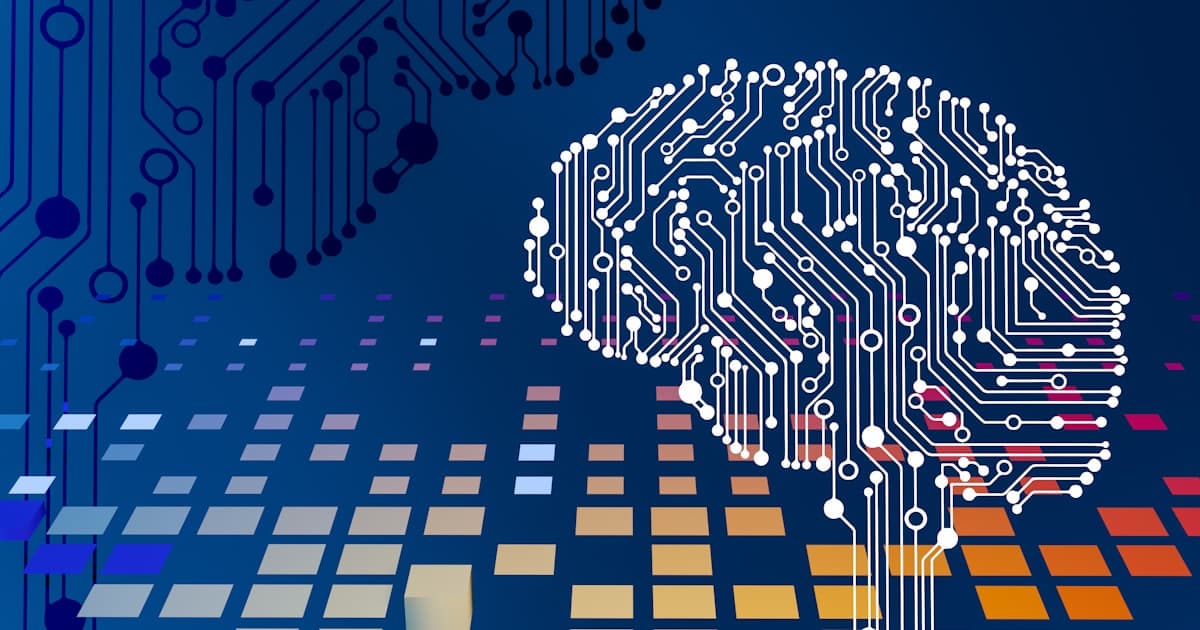
A neural network is a mathematical system loosely inspired by the structure of the brain — but the 'loosely' is doing a lot of work in that sentence. The brain contains roughly 86 billion neurons, each connected to thousands of others through synapses. A neural network mimics this with layers of simple mathematical units called nodes or artificial neurons, connected by numerical values called weights.
The architecture is almost always layered. You have an input layer, which receives raw data — pixel values from an image, word tokens from a sentence, sensor readings from a machine. Then you have one or more hidden layers, where computation happens. Then an output layer, which produces a result: 'this is a cat', 'this email is spam', 'the patient likely has pneumonia'.
Each connection between nodes has a weight — a number that can be positive, negative, large, or tiny. When data flows through the network, each node takes its incoming signals, multiplies each one by the corresponding weight, adds them all up, and passes the result through a simple mathematical function (called an activation function) before sending it on. The key insight is this: those weights are the entire memory of the network. Everything the system has 'learned' is encoded in millions — or billions — of these numbers. Change the weights, and you change what the network knows. Training a neural network is nothing more, and nothing less, than finding the right set of weights.
How does learning actually happen? The role of error and gradients
Here is where most explanations stop at 'the network adjusts its weights' and leave you no wiser. The actual mechanism is called gradient descent, and it is one of the most important ideas in modern science.
Imagine the network is trying to learn to recognise handwritten digits. You show it an image of the number 7. The network, with its current randomly initialised weights, produces an output — say, it guesses '3'. That is wrong. You can measure exactly how wrong it is using a mathematical function called the loss function, which produces a single number representing the size of the error.
Now the key step: backpropagation. Working backwards through the network, the algorithm calculates how much each individual weight contributed to that error. This is the gradient — essentially the slope of the error landscape relative to each weight. Weights that contributed more to the mistake get nudged harder; weights that were nearly blameless get nudged less. The nudge size is controlled by a hyperparameter called the learning rate.
Repeat this across millions of examples — show the network a 7, measure the error, backpropagate, adjust — and the weights gradually shift into a configuration that produces correct answers. This is gradient descent: iteratively walking downhill on the error landscape until you reach a valley, a point where the network's mistakes are minimised.
The mathematical foundations for backpropagation were formalised in the 1980s, most famously by David Rumelhart, Geoffrey Hinton, and Ronald Williams in work published in Nature in 1986 — a paper that is genuinely one of the most cited in the history of computer science.
Why does depth matter? What 'deep learning' actually adds
You will have heard the term 'deep learning' used as though it were simply a synonym for advanced AI. What it actually means is a neural network with many hidden layers — hence 'deep'. The question is why depth is so powerful, and the answer comes down to hierarchical feature extraction.
Consider image recognition again. The first hidden layer of a deep network tends to learn to detect very simple patterns — edges, colour gradients, basic textures. The next layer combines those edges into slightly more complex shapes — curves, corners, simple geometries. Deeper layers combine those shapes into object parts: eyes, wheels, leaves. The final layers combine parts into whole objects: faces, cars, trees.
No human programmer specified any of this hierarchy. It emerges automatically from training on data, purely through gradient descent. This is why Yann LeCun, now Chief AI Scientist at Meta and one of the pioneers of deep learning, has called the process 'self-organising representation learning' — the network builds its own vocabulary for describing the world.
The practical implication is dramatic. Shallow networks plateau; they can only learn relatively simple relationships between inputs and outputs. Deep networks can represent extraordinarily complex functions — which is why a deep network trained by Google's team can classify a million different categories of image, while a two-layer network cannot get beyond a few hundred. Depth is not just a quantitative improvement; research has shown it is a qualitative change in what kinds of patterns a network can represent at all.
From pixels to language: how the same mechanism scales
One of the most conceptually striking things about neural network learning is that the core mechanism — weighted connections, loss functions, backpropagation, gradient descent — is essentially the same whether the network is learning to recognise tumours in medical scans, predict the next word in a sentence, or control a robotic arm.
The architecture adapts to the problem. For images, convolutional neural networks (CNNs) use a clever structure that exploits the spatial relationship between nearby pixels, dramatically reducing the number of weights needed. For sequences — language, music, time-series data — recurrent architectures or, now dominantly, transformer architectures handle the fact that order and context matter.
The transformer architecture, introduced in a 2017 paper from Google Brain titled 'Attention Is All You Need' by Vaswani and colleagues, is the engine behind GPT-4, Claude, Gemini, and virtually every major language model today. Its key innovation, the attention mechanism, allows the network to dynamically decide which parts of an input sequence are most relevant to each output it produces — so when translating 'the bank of the river', the network can 'attend' to 'river' to determine that 'bank' means a riverbank, not a financial institution.
But strip away the architectural differences and the learning process is still gradient descent. The network makes predictions, measures error against known correct answers, and backpropagates the signal. The same elegant mechanism that taught a 1990s network to read postcodes now teaches a trillion-parameter model to write legal briefs.
What neural networks still cannot do — and why that matters
Understanding how neural networks learn also makes their limitations legible. Because learning is purely statistical — finding patterns that minimise error across a training dataset — several structural weaknesses follow directly from the mechanism.
First, neural networks can fail catastrophically on inputs that differ significantly from their training data, a problem researchers call distribution shift. A network trained on medical images from one hospital may perform poorly at another if the imaging equipment differs slightly. It has not learned a concept; it has learned a correlation that happened to hold in its training data.
Second, neural networks have no built-in causal understanding. They learn that X and Y tend to co-occur, but not that X causes Y. This is why a skin cancer detection model might, as studies have shown, overweight the presence of a ruler in an image — rulers appeared frequently in clinical training photos of suspicious lesions — rather than the lesion's actual visual features.
Third, there is the problem of interpretability. Because knowledge is distributed across billions of weights rather than stored in any human-readable form, it is often impossible to explain why a network produced a particular output. This is not a cosmetic problem: it is a core challenge for deploying AI in high-stakes settings like medicine, law, and finance.
Researchers at institutions including MIT, Oxford's Future of Humanity Institute, and DeepMind are actively working on these problems — but understanding them requires first understanding the mechanism that creates them. The limitations of neural networks are not bugs bolted onto an otherwise clean system; they are logical consequences of how gradient descent learning works.
“Everything a neural network knows is encoded in a list of numbers — nothing more.”
Pro tip
Next time you encounter an AI product — a recommendation engine, a spam filter, a chatbot — ask yourself: what was its training data, and what counts as 'error' in its loss function? These two questions will tell you more about what the system will get right and wrong than any marketing description. Researchers call this 'interrogating the objective function', and it is the fastest route to AI literacy.
Neural networks learn through a process that is simultaneously humble and extraordinary: make a guess, measure the mistake, apportion blame backwards through the system, adjust slightly, repeat. Billions of times. The elegance is in how much complexity this simple loop can generate — the same algorithm that learned to sort postcodes now holds conversations, writes code, and reads X-rays. Knowing the mechanism does not diminish the achievement; it makes it more impressive. These systems do not think. But they learn, in a sense precise enough to transform the world — and that distinction is exactly where clear thinking about AI has to start.
Share this snack